
How to approach these stories
Some of these people may already be familiar in your family or sangat; others may open a completely new part of Sikh history. Read the collection as ten doorways rather than a complete list, and let any name that stays with you lead into its wider place, period, and relationships.
Traditional narratives and historical reference works can carry different kinds of detail. Each entry below is paired with an identifiable source, primarily Encyclopaedia of Sikhism material made available through The Sikh Encyclopedia. Where an account is remembered through tradition, it is described that way rather than presented as a modern eyewitness record.
The phrase “lesser-known” is also relative. A story learned at home may be entirely new to a person reconnecting through English. The aim is to widen the doorway with enough context to continue reading.
1. Bibi Amro and the hymn that opened a path
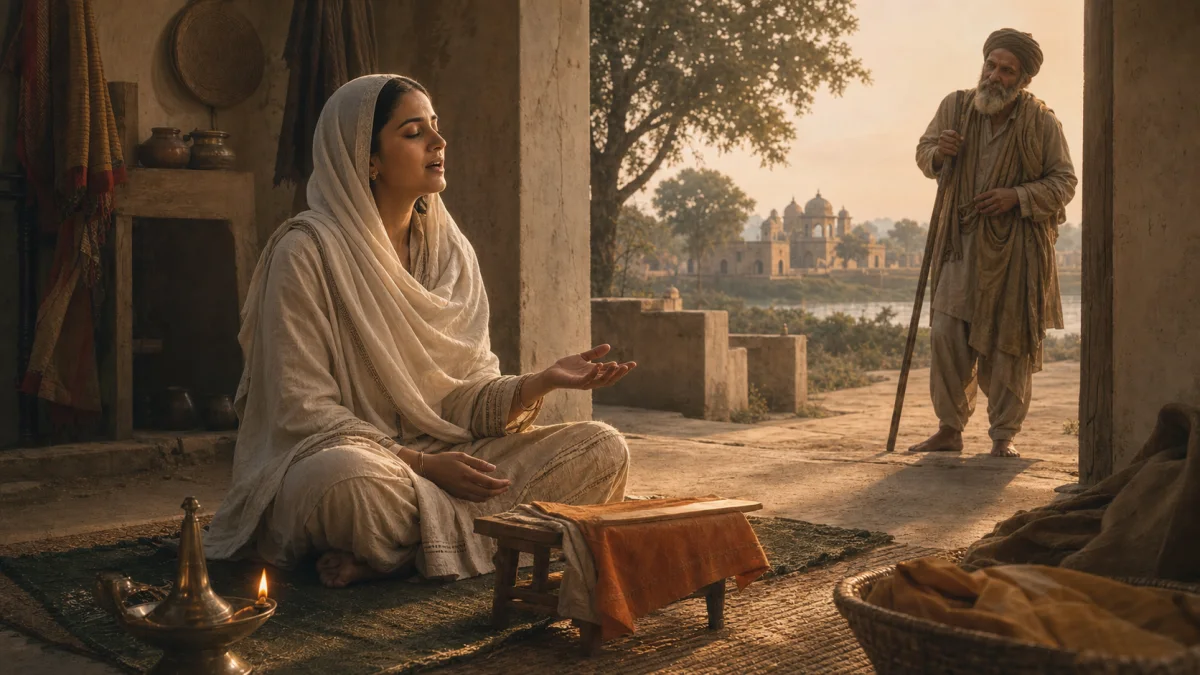
Bibi Amro, the daughter of Guru Angad and Mata Khivi, is remembered for knowing and singing Guru Nanak’s hymns while living her household life at Basarke. According to Sikh tradition, Amar Das heard her recitation and was struck by the spiritual depth of what he heard.
He asked whose words they were and wanted to meet the living successor of Guru Nanak. Bibi Amro brought him to Guru Angad. Amar Das became a devoted Sikh and later the third Guru.
The story’s scale is easy to miss. There is no public stage and no dramatic proclamation, only memorised Bani, a woman’s daily devotion, a sincere question, and a relationship that makes the next meeting possible. It is a reminder that transmission often happens through the person who knows the way and quietly takes someone there.
2. Mata Khivi and the shade of langar
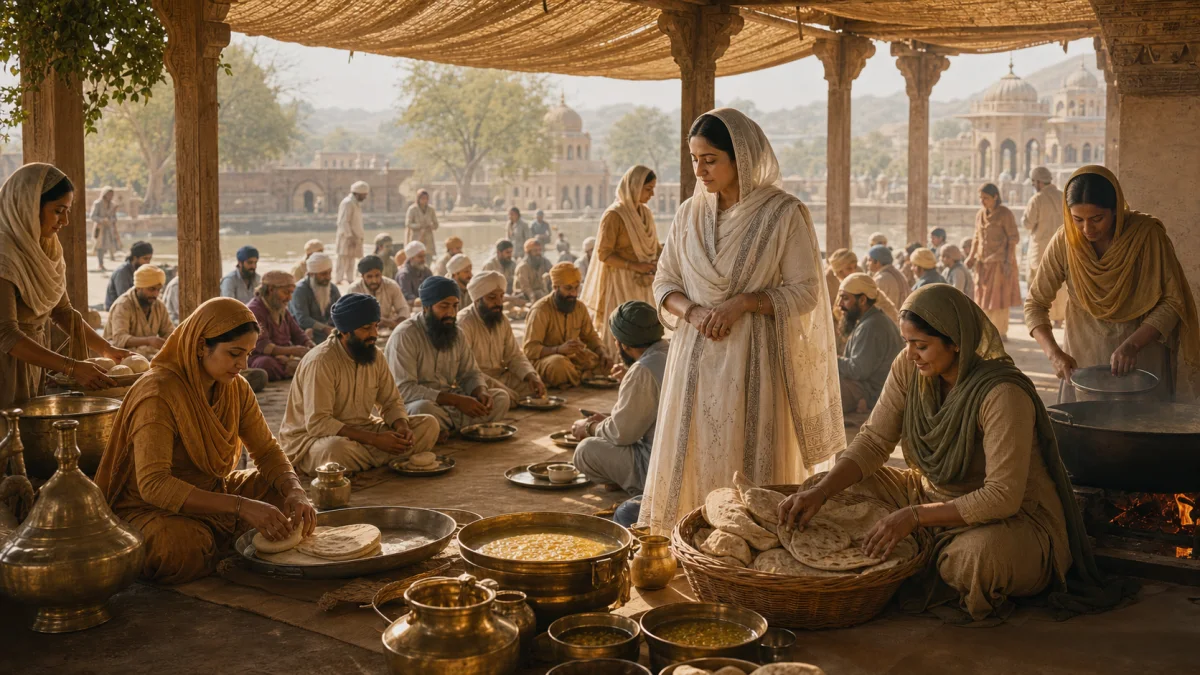
Mata Khivi supervised Guru ka Langar at Khadur as people arrived to meet Guru Angad and learn. The historical memory is unusually vivid because the verses of Satta and Balvand preserved in Guru Granth Sahib name her and compare her presence to a deeply shaded tree.
The image joins nourishment and refuge. Langar was not only food appearing on a plate; it required organisation, attention, ingredients, labour, welcome, and the refusal to let status decide who could sit and eat. Mata Khivi’s stewardship helped give that principle dependable daily form.
Her story expands the meaning of leadership. Some institutions are changed by a speech. Others are changed because someone makes the practice reliable enough that people can trust it will still be open when they arrive.
3. Makhan Shah Lubana and “Guru ladho re”
After Guru Har Krishan indicated that his successor would be found at Bakala, several claimants presented themselves. The traditional account centres on Makhan Shah Lubana, a trader whose ship had survived a dangerous storm after he promised an offering to the Guru.
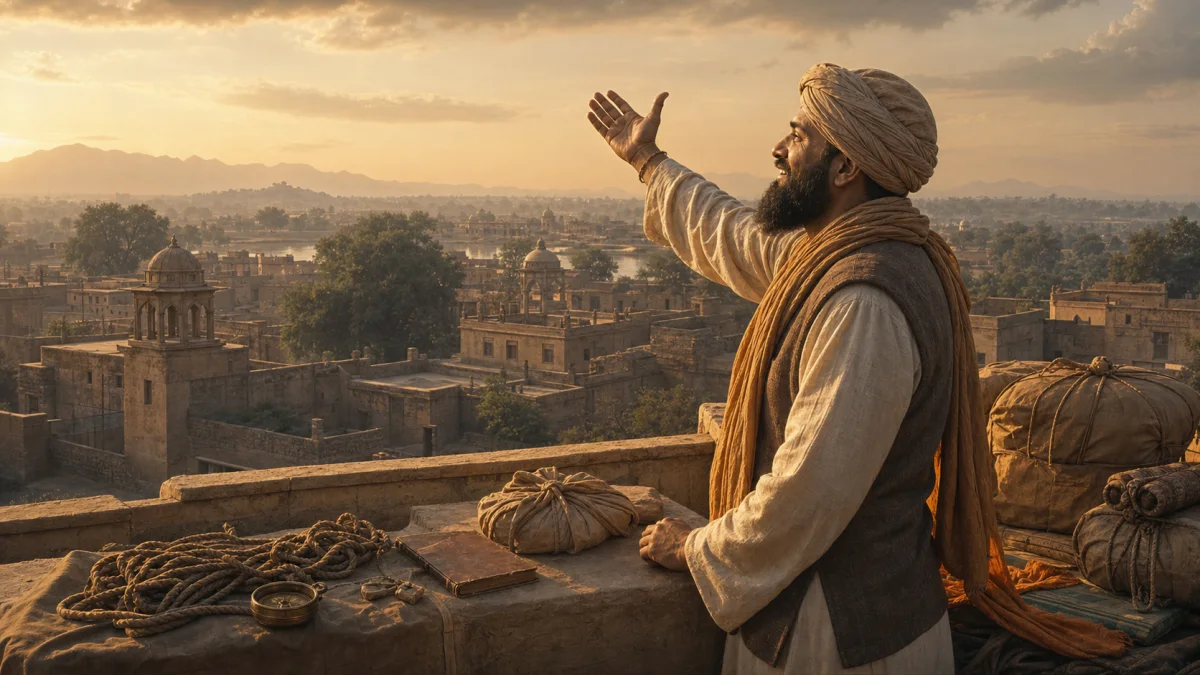
At Bakala, he is remembered as testing the claimants by presenting a smaller sum. Guru Tegh Bahadur asked about the full amount Makhan Shah had promised. Convinced that he had found the Guru, the trader went to the rooftop and called out, Guru ladho re: the Guru has been found.
The story is often told for its dramatic recognition, but Makhan Shah’s own integrity matters too. A promise made in fear was not forgotten once the danger passed. His search joined discernment with the responsibility to fulfil what he had said.
4. Bhai Bidhi Chand and the two horses
Two prized horses, Dilbagh and Gulbagh, were being brought as an offering for Guru Hargobind when the governor of Lahore seized them. Tradition remembers Bhai Bidhi Chand entering the governor’s stables twice in disguise, first as a grass seller and later as an astrologer, to recover them one by one.
The episode is memorable because resourcefulness carries the action. Bidhi Chand understood the stable, the routines around it, and the assumptions that made each disguise believable. The story also sits inside a longer life: he is remembered as a warrior, preacher, companion of the Gurus, and a person who had turned away from an earlier life of banditry.
Read as more than an adventure, it asks what skills can become after a person’s direction changes. Cleverness that once served the self can be disciplined toward responsibility and service.
5. Pir Buddhu Shah and costly friendship
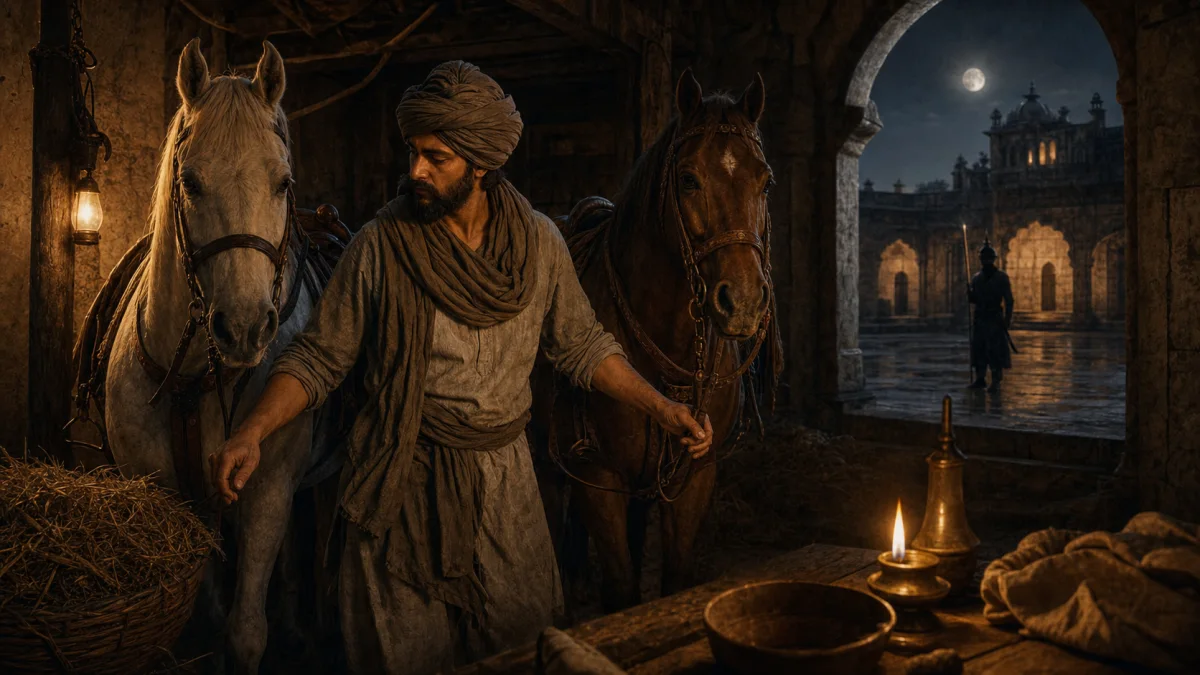
Pir Buddhu Shah, also identified as Badr ud-Din of Sadhaura, was a Muslim religious figure remembered for his friendship with Guru Gobind Singh. He had recommended Pathan soldiers to the Guru. When most deserted during the Battle of Bhangani, the Pir came with his own followers and family to support him.
The Sikh Encyclopedia records that two of his sons, his brother, and a number of followers died in the battle. Afterward, Pir Buddhu Shah declined rich gifts and instead asked for personal tokens from the Guru. He later faced punishment for the support he had given.
The account resists a narrow idea of community. Friendship is not praised because two people erased their identities. It matters because loyalty crossed a boundary at real cost, and because conscience proved stronger than the safety of standing only with one’s own group.
6. Bhai Nand Lal and a Persian voice at Anandpur
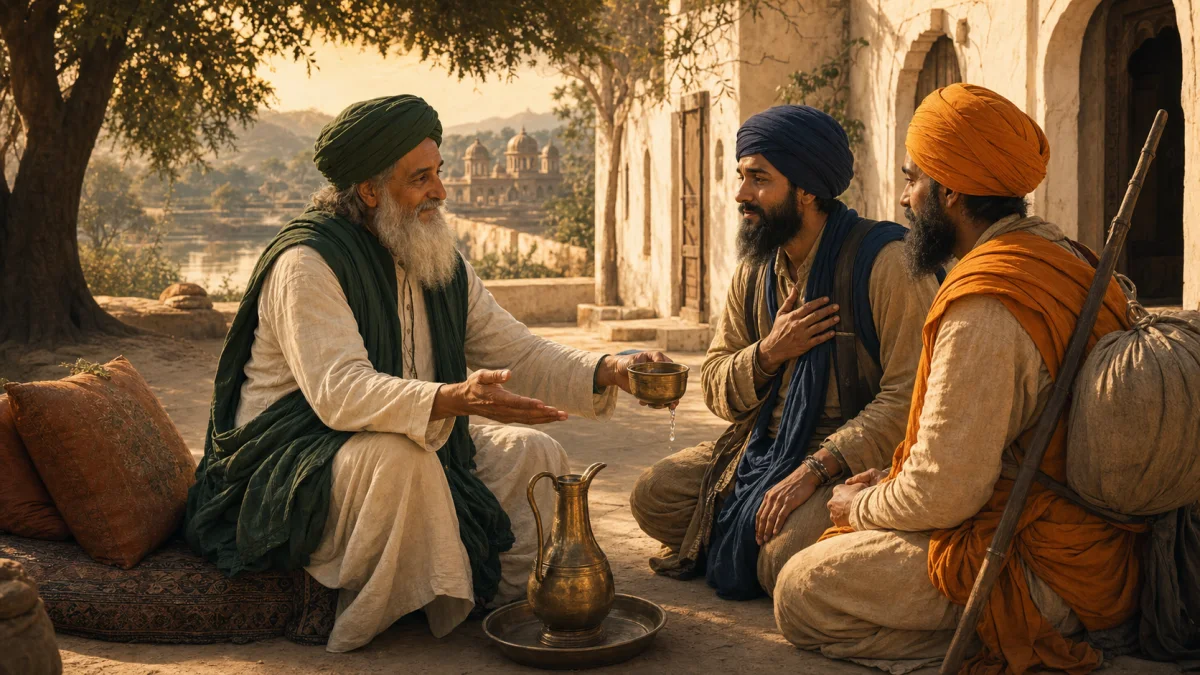
Bhai Nand Lal, known by the poetic name Goya, was a scholar and Persian poet who came to Guru Gobind Singh at Anandpur. His writing entered Sikh literary memory with a voice distinct from the Braj and Punjabi works around him.
He is remembered not only for refined mystical poetry but also for teaching and for maintaining langar. The Sikh Encyclopedia notes that his Persian compositions are respected within the Sikh canon of approved writings, while questions remain around the authorship and dating of some conduct texts attributed to him.
His life opens a less familiar window onto Anandpur: not only a fortress or battlefield, but a centre of languages, poetry, learning, hospitality, and intellectual exchange. Sikh history becomes richer when the pen, classroom, and kitchen remain visible beside martial courage.
7. Bhai Jaita’s journey and Dargahi Shah’s night watch
After Guru Tegh Bahadur’s execution in Delhi in 1675, Bhai Jaita carried the Guru’s severed head toward Anandpur under extreme danger. Later known as Bhai Jivan Singh after receiving Khalsa initiation, he is remembered for completing the journey and being honoured by Guru Gobind Singh.
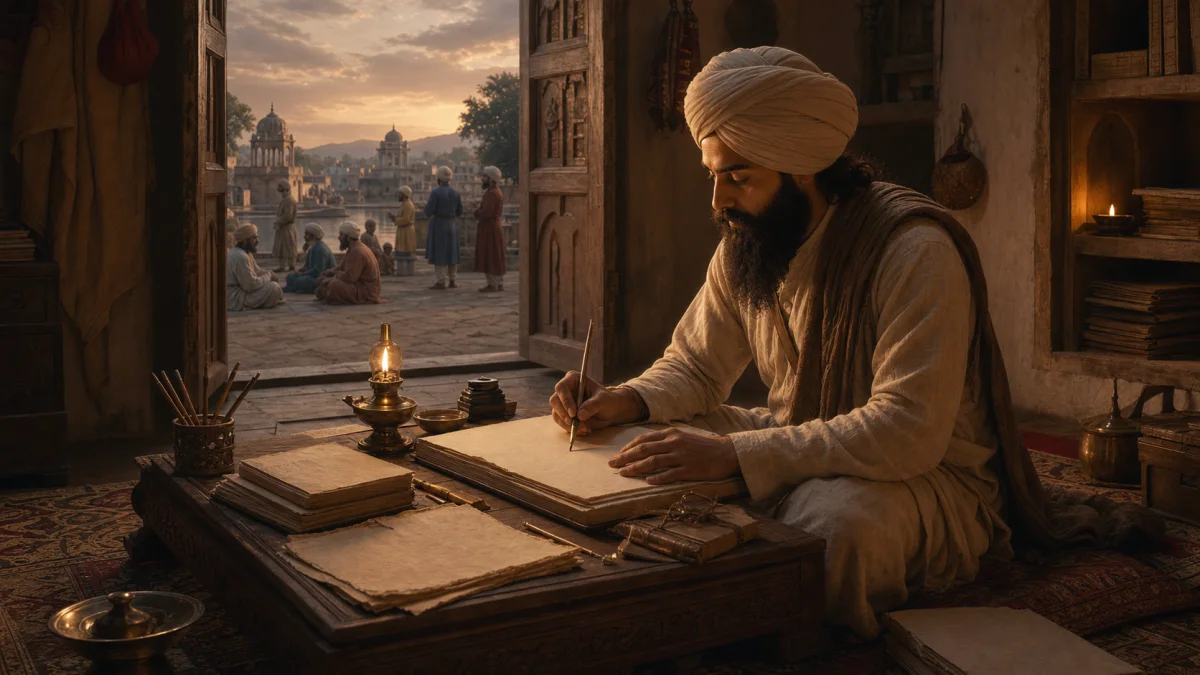
A quieter moment appears in the history of Gurdwara Nabha Sahib. Travelling through the forested area, Bhai Jaita reached the hut of an elderly Muslim recluse, Dargahi Shah. After hearing what had happened, Dargahi Shah kept watch over the sacred charge so the exhausted traveller could sleep for a few hours.
The larger act required extraordinary courage. The night watch adds another layer: even the person carrying history sometimes needs shelter. One person’s bravery and another person’s hospitality can belong to the same story.
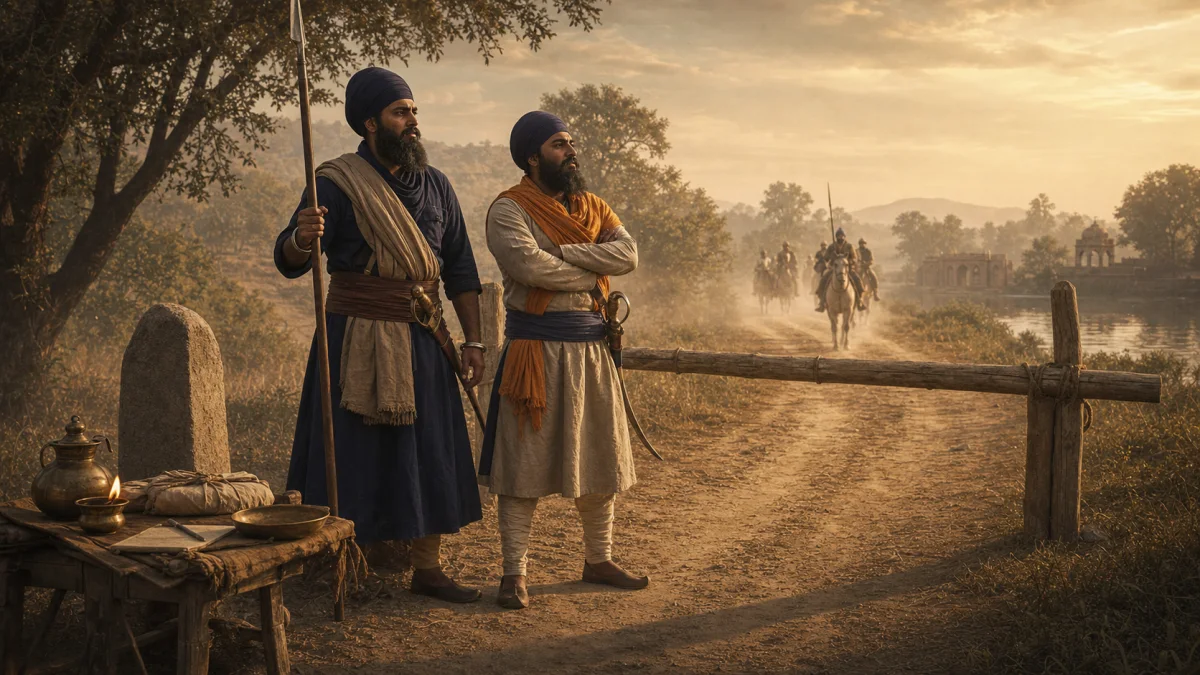
8. Bhai Bota Singh and Bhai Garja Singh announce that the Khalsa remains
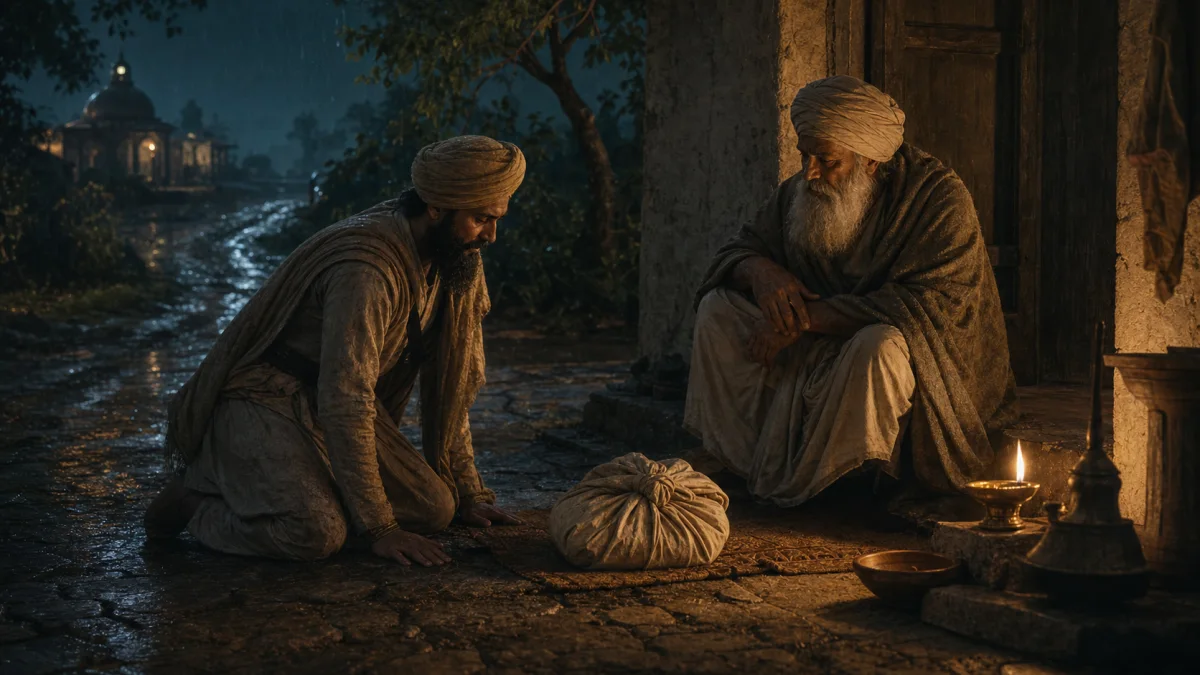
During severe persecution in 1739, Bhai Bota Singh was living in concealment. According to the account preserved in Sikh historical writing and folklore, a remark that a true Sikh would not hide cut deeply. With Bhai Garja Singh beside him, he took a position on the main road and began collecting a token toll.
The point was not revenue. It was visibility. He sent a deliberately taunting letter to the governor so authority could not pretend the Sikhs had disappeared. When soldiers arrived, the two refused an offer to surrender and were killed fighting.
The story belongs to a brutal period and should not be detached from it. Its enduring image is a public declaration of continued existence: when erasure is the policy, being seen can itself become resistance. Garja Singh’s presence also matters; the account is about companionship under impossible odds, not a lone hero.
9. Bhai Alam Singh Nachna and the value of vigilance
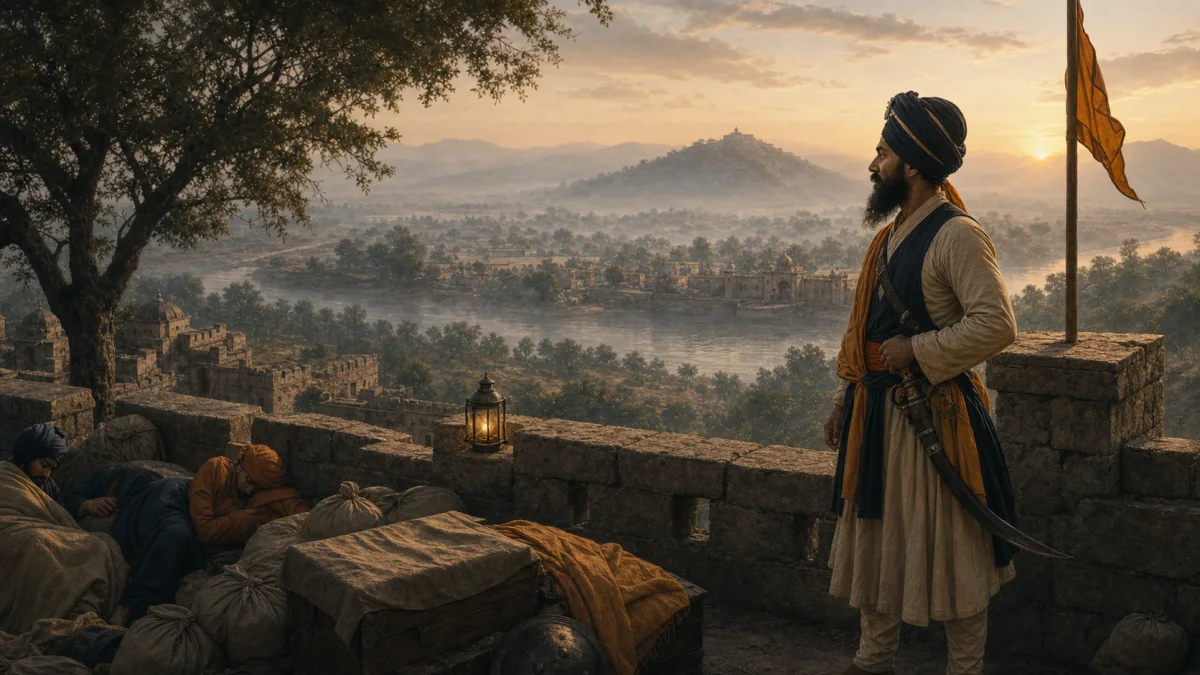
Bhai Alam Singh earned the epithet Nachna, meaning dancer, because of his unusual agility. He served in Guru Gobind Singh’s retinue and appears in accounts of the conflicts around Anandpur.
One episode links him with an attempted night attack led by Khanzada, the son of the governor of Lahore. Alam Singh’s watchfulness alerted the Sikhs before the force could complete its surprise assault. He later commanded a garrison during the final siege and died at Chamkaur.
The dramatic details of battle can overshadow the quality that prevented one: attention. Staying alert while others rest is rarely the part of courage that receives poetry, yet communities often endure because someone notices what is changing early enough to act.
10. Bhai Sukha Singh and Bhai Mehtab Singh return to Amritsar
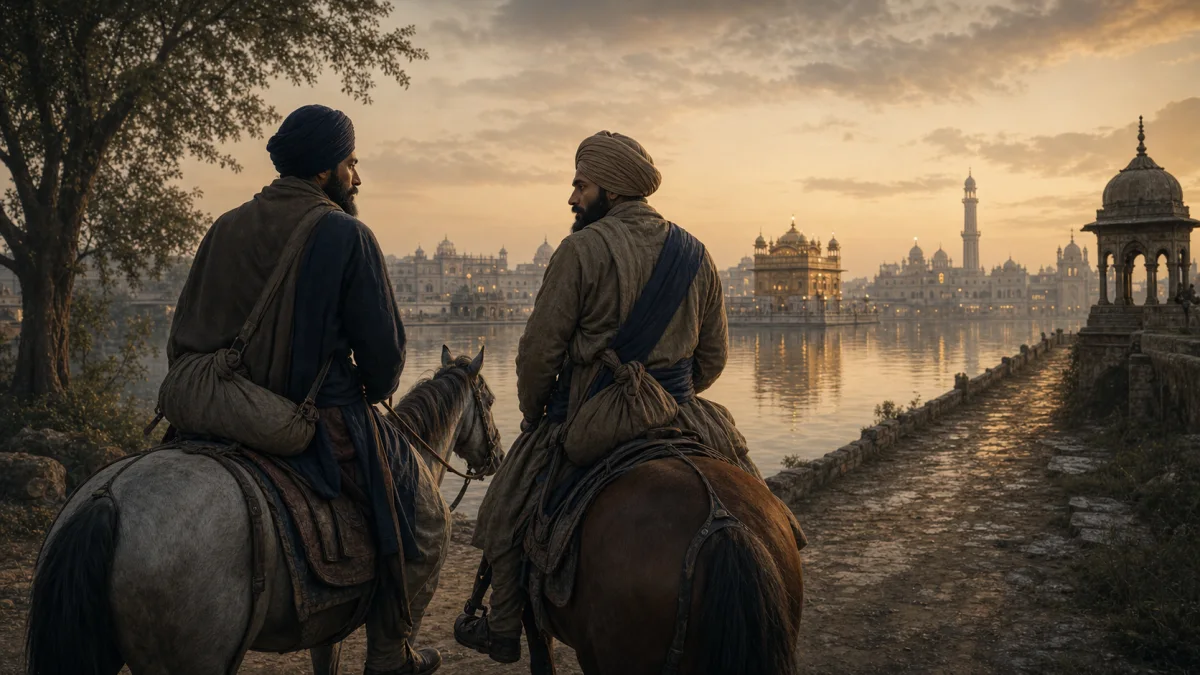
In 1740, news reached Sikhs outside Punjab that Massa Ranghar had occupied the Harmandir Sahib complex, barred Sikh access, and used the sacred place in ways remembered as deliberate desecration. Bhai Mehtab Singh and Bhai Sukha Singh travelled to Amritsar in disguise.
The traditional account records that they entered as revenue officials, killed Massa Ranghar, and escaped before the guards understood what had happened. The episode is violent because the period was violent: Sikh gatherings and access to sacred places were being suppressed under state persecution.
It should be read with that context rather than turned into a free-floating revenge tale. The historical question is what it meant for a persecuted community to refuse the conversion of its central sacred space into a symbol of its defeat. Continue from the story into the wider eighteenth-century history, where survival depended on networks, memory, and many lives beyond the two names most visible in this episode.
Let each story lead to a wider history
A list of ten can create curiosity, but it can also flatten people into one striking moment. Resist that. Follow Bibi Amro into the household and musical life around Khadur. Follow Mata Khivi into the development of langar. Follow Bhai Bidhi Chand into Guru Hargobind’s period, Bhai Nand Lal into Persian Sikh literature, and Bota Singh into the persecution and reorganisation of the eighteenth-century Panth.
Compare dates and tellings. Notice when a source cites an earlier text, when an event is carried mainly through tradition, and when later commemoration gives a place its present meaning. Historical care does not make the stories cold. It lets courage, service, and devotion remain connected to real people and circumstances.
Most importantly, allow the collection to change what you look for. Sikh history is held not only by the most famous person in a scene, but also by the singer, organiser, companion, host, scribe, scout, traveller, and person who keeps watch.
Sources and further reading
These links provide context for the history, terminology, or traditional account discussed above. Sehaj writes for general learning and reflection, not as a substitute for primary-source study or guidance from trusted Sikh educators.
- Reddit r/Sikh: Lesser-known moments from Sikh historyA community discussion sharing people and moments from Sikh history that readers wanted to explore more deeply.
- Reddit r/Sikh: Favourite SaakhisA second community thread mentioning Bhai Bidhi Chand, Bhai Bota Singh and Bhai Garja Singh, and other accounts readers wanted to explore.
- The Sikh Encyclopedia: Bibi AmroBiographical context for Bibi Amro and the tradition that her hymn recitation led Amar Das to Guru Angad.
- The Sikh Encyclopedia: Mata KhiviMata Khivi’s stewardship of langar and the verses on Ang 967 that remember her shade and nourishment.
- The Sikh Encyclopedia: Gurdwara Baba BakalaContext for Makhan Shah Lubana’s search and declaration that Guru Tegh Bahadur had been found.
- The Sikh Encyclopedia: Bhai Bidhi ChandBiographical context and the traditional account of recovering the horses Dilbagh and Gulbagh.
- The Sikh Encyclopedia: Pir Buddhu ShahThe Pir’s relationship with Guru Gobind Singh, support at Bhangani, losses, and later execution.
- The Sikh Encyclopedia: Bhai Nand LalA biography of the Persian poet, scholar, teacher, and Sikh of Guru Gobind Singh’s Anandpur.
- The Sikh Encyclopedia: Bhai Jivan SinghThe life of Bhai Jaita, later Bhai Jivan Singh, and his journey from Delhi to Anandpur.
- The Sikh Encyclopedia: Nabha SahibThe remembered night when Dargahi Shah sheltered Bhai Jaita and watched over his sacred charge.
- The Sikh Encyclopedia: Bhai Bota SinghThe road, toll, letter, and final stand of Bhai Bota Singh and Bhai Garja Singh in 1739.
- The Sikh Encyclopedia: Alam Singh NachnaBiographical context, vigilance at Anandpur, command during the siege, and death at Chamkaur.
- The Sikh Encyclopedia: Massa RangharContext for the occupation of Harmandir Sahib and the 1740 action by Bhai Mehtab Singh and Bhai Sukha Singh.