
The traditional account
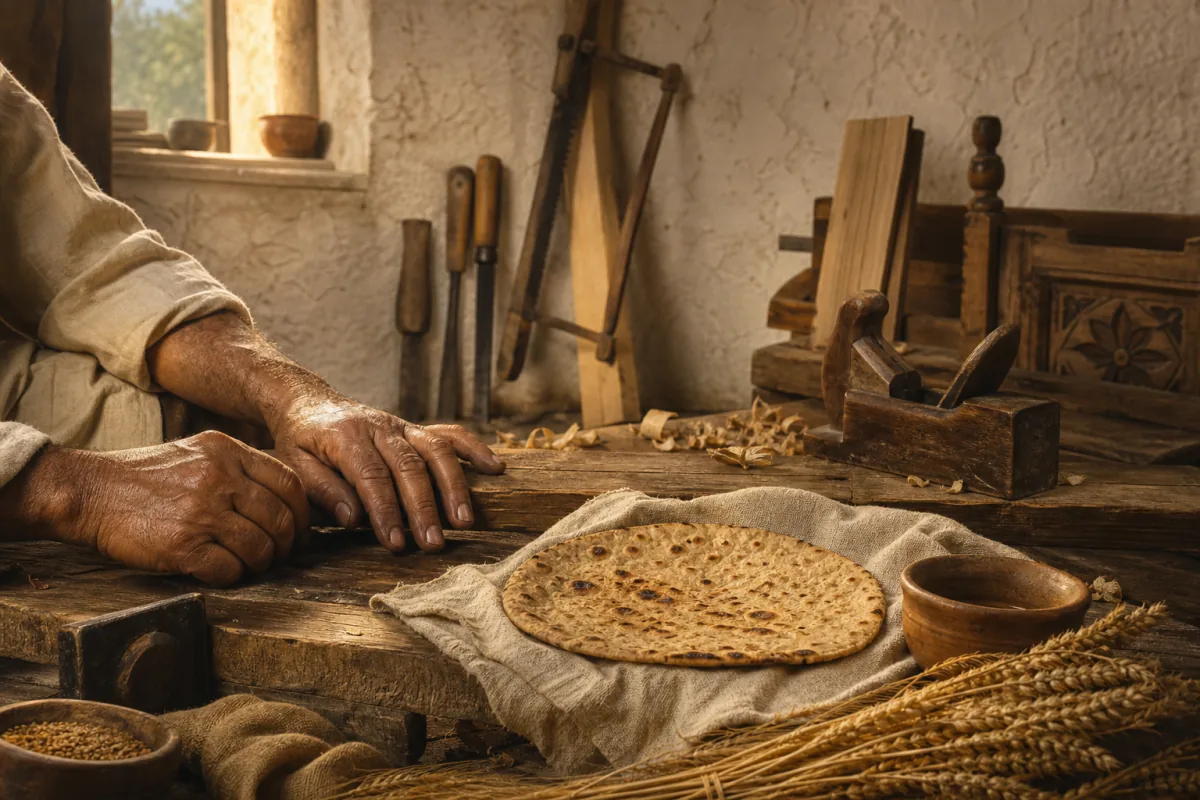
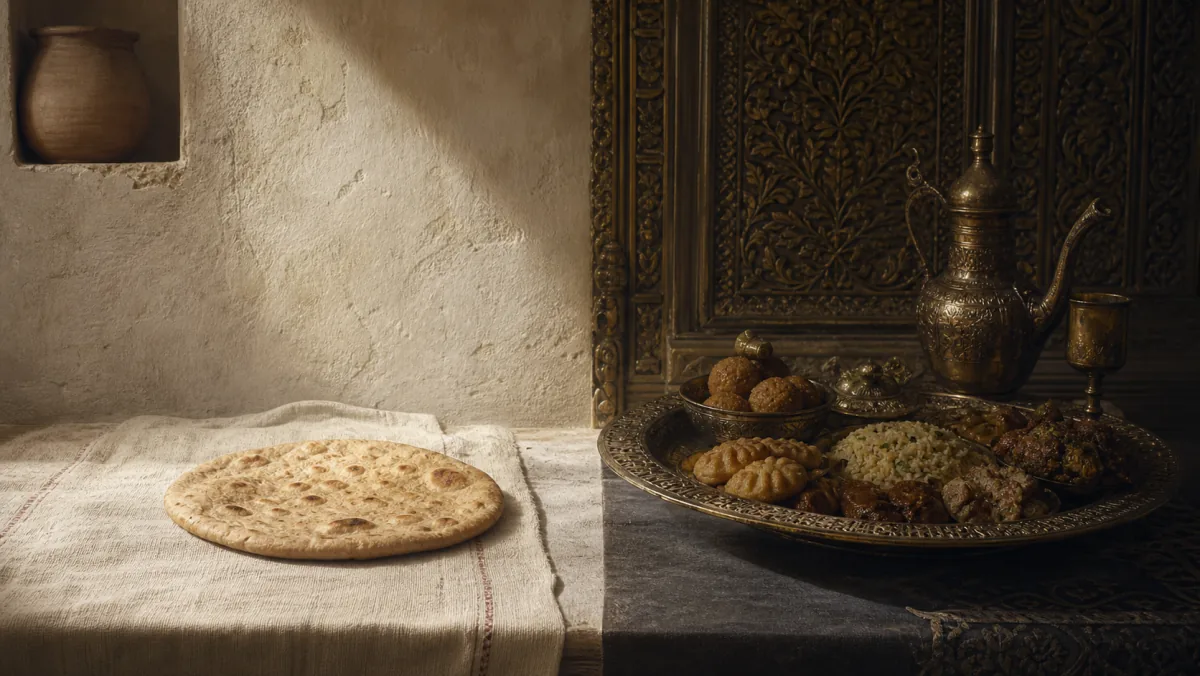
In the commonly told Saakhi, Guru Nanak and Bhai Mardana arrive in Saidpur. Guru Nanak stays with Bhai Lalo, a carpenter who earns modestly through his own labour and offers a simple meal. Malik Bhago, a wealthy official, holds an elaborate feast and expects Guru Nanak to attend.
When questioned about preferring Bhai Lalo’s coarse bread, Guru Nanak exposes the moral difference between the meals. Retellings often describe milk emerging from Bhai Lalo’s bread and blood from Malik Bhago’s rich food - a vivid image of honest earning on one side and the suffering of others on the other.
This account comes through the traditional Saakhi literature, so some details vary between versions. The central contrast remains consistent: Guru Nanak rejects pride and exploitation and affirms the dignity of honest work.
The story does not romanticise poverty
The point is not that plain food is automatically pure or wealth automatically corrupt. Bhai Lalo’s meal matters because of how it was earned and offered. Malik Bhago’s feast is criticised because status and abundance are disconnected from justice.
That distinction matters today. The Saakhi does not ask people with less to remain with less. It asks everyone - especially those with power - to look honestly at the labour and harm behind what they possess.
Kirat karni: honest work as lived practice
The phrase kirat karni is often used for earning through honest effort. In this Saakhi, work is not spiritually separate from life. The workshop, wage, meal, and treatment of other people all belong to the same moral field.
Honest work includes more than avoiding theft. It can ask whether people are paid fairly, whether power is used to pressure the vulnerable, whether credit is shared, and whether success requires someone else’s silence.
- How was this value created, and who carried the cost?
- Am I treating another person’s labour as fully human?
- Does my public generosity depend on private unfairness?
A challenge to status and social rank
Choosing Bhai Lalo’s home also interrupts the assumption that importance lives with wealth. The ordinary worker becomes the person whose company and food are worthy. The official’s demand for recognition is refused.
This is why the story remains larger than a lesson about personal finances. It is about whose dignity society notices, whose table is honoured, and whether spiritual language is being used to decorate power.
Three ways to carry the Saakhi into this week
A reflection becomes more honest when it reaches a decision. Choose one response small enough to complete.
- Ask one question about the labour behind something you regularly buy.
- Give visible credit to someone whose work is usually hidden.
- Review one place where convenience may be asking another person to absorb the cost.
Sources and further reading
These links provide context for the history, terminology, or traditional account discussed above. Sehaj writes for general learning and reflection, not as a substitute for primary-source study or guidance from trusted Sikh educators.
- SGPC Gurdwara Gazette - Equality among classes in SikhismDiscusses the Bhai Lalo account in the context of equality, honest livelihood, and Guru Nanak’s rejection of rank-based superiority.
- Encyclopaedia Britannica - Guru NanakBiographical context for Guru Nanak and the development of the Sikh community.