
Prepare the story, not a lecture
Read or listen once before sharing the Saakhi. Check the names, setting, difficult moments, and source. Decide what context your child actually needs. A five-year-old may only need to know why a choice was kind or brave; an older child may ask about power, caste, conflict, or whether every detail is historical.
Being ready does not mean having every answer. “I’m not sure - let’s find out” models care and humility.
- Know the central choice in the story.
- Notice any frightening, miraculous, or contested detail before bedtime.
- Keep one trustworthy source ready if a bigger question appears.
A calm ten-minute family routine
The timing is intentionally loose. Some nights the story will take six minutes and the conversation one. Other nights a question will open something worth staying with.
- Minute 1 - Settle in and name who or what the story is about.
- Minutes 2–7 - Read or listen without pausing to explain every line.
- Minutes 8–9 - Ask one open question.
- Minute 10 - Let the child choose a word, picture, or action to remember.
Questions that work at different ages
Open questions keep the story alive. Avoid “What was the moral?” as the only ending; it can make a rich account feel like a worksheet.
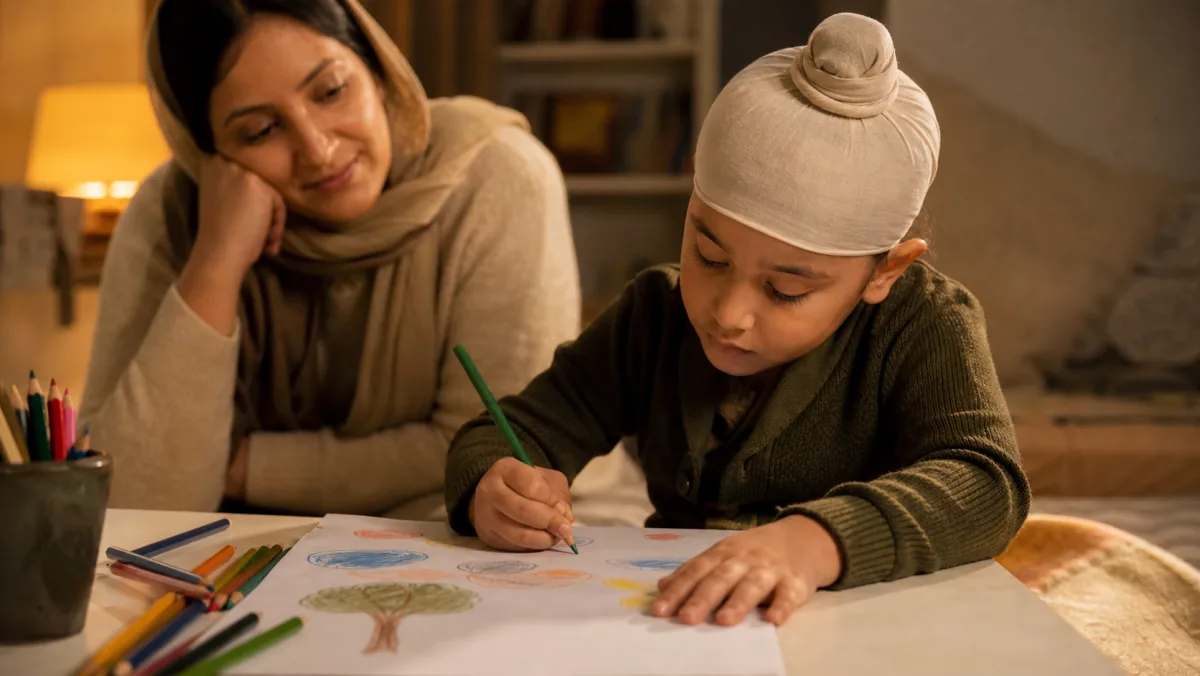
- Ages 4–6: What did you notice? Who was helped? Which part would you draw?
- Ages 7–10: What choice was difficult? What might you have done?
- Ages 11+: Whose point of view is missing? Which details would you want to verify? How does this value meet life now?
Keep reverence and accuracy together
Children deserve stories that are engaging without pretending every retelling is identical. If an account is traditional, say so. If different versions exist, that can become a thoughtful conversation rather than a problem to hide.
When choosing a version to share, look for restraint around invented dialogue, sensational miracles, and images of the Sikh Gurus. The most engaging version is not always the one that treats uncertain details as settled fact.
Build a family thread, not a content queue
Return to a story later in the week when real life echoes it. “This reminds me of the choice we heard about” gives the Saakhi a place in family language without forcing a lesson into every moment.
One story remembered together is more valuable than five stories rushed through. Let repetition become familiarity.
Sources and further reading
These links provide context for the history, terminology, or traditional account discussed above. Sehaj writes for general learning and reflection, not as a substitute for primary-source study or guidance from trusted Sikh educators.
- SikhNet - About Sikh Stories for ChildrenBackground on SikhNet’s long-running children’s story project and its approach to spiritual lessons and artwork.
- SikhNet Play - Stories for ages 7 to 12An example of age-grouped Sikh history and values stories for family listening.