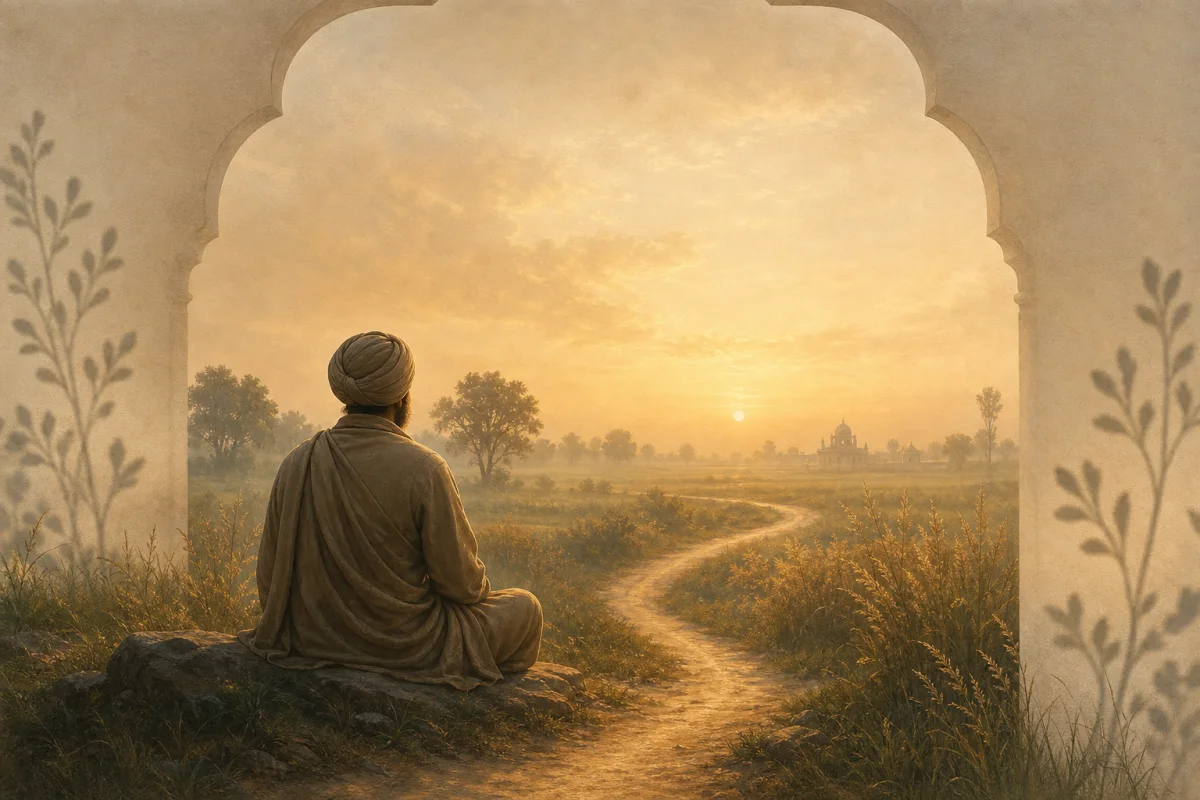

Begin with a five-part map
A simple structure gives new information somewhere to land. The boundaries below are learning aids, not walls; themes and consequences continue across them.
- Guru Nanak and the formation of early Sikh communities.
- The succeeding Gurus and the growth of Sikh institutions, scripture, cities, and sangat.
- Guru Gobind Singh, the Khalsa, and the transition to Guru Granth Sahib and Guru Panth.
- The eighteenth and nineteenth centuries: persecution, misls, empire, reform, and colonial rule.
- The twentieth century to today: gurdwara reform, Partition, 1984, migration, and global Sikh life.
Use stories as doors, then add context
A Saakhi gives you a person, decision, and emotional centre. After reading it, ask three context questions: When is this set? Which source carries it? What wider change or institution surrounds it? Those questions turn an isolated moral story into a path through history.
For example, the Bhai Lalo account can open questions about Guru Nanak’s travels, caste and occupational status, honest work, the formation of early sangats, and the nature of Janamsakhi literature.
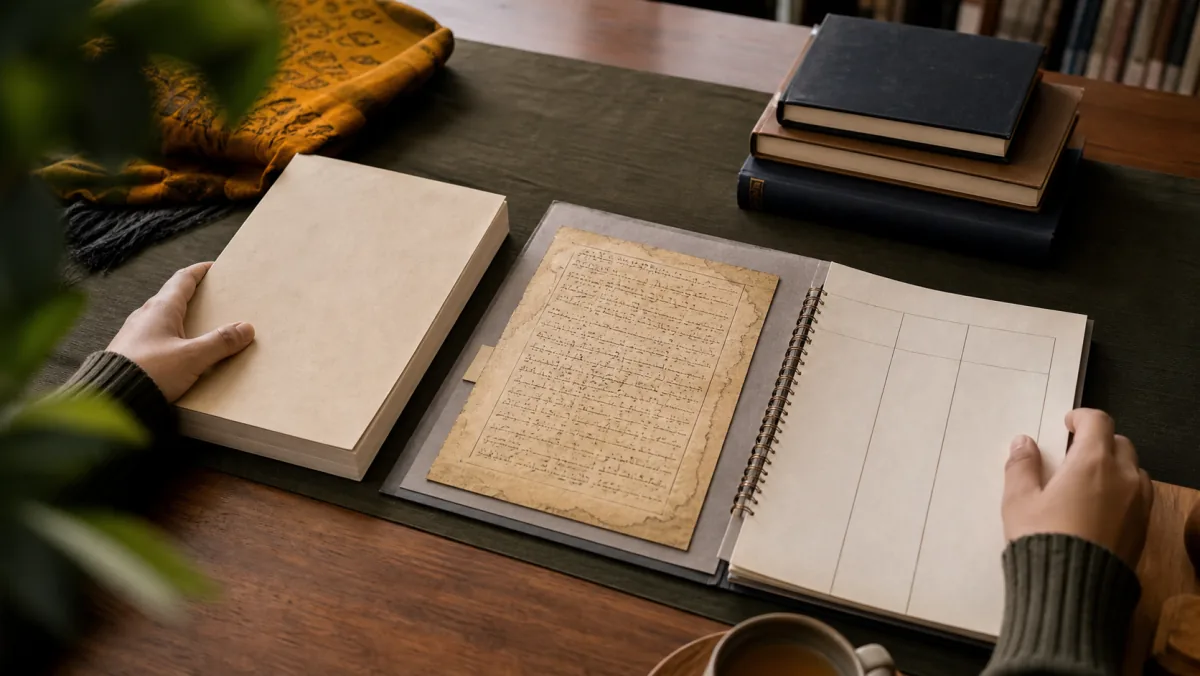
Use a source ladder
Not every question needs an academic monograph, and not every social post deserves your trust. Move up and down a source ladder depending on what you are trying to understand.
- Orientation: a museum, encyclopedia, or well-edited introductory history.
- Narrative: a Saakhi collection, biography, oral account, or documentary that makes the period memorable.
- Depth: a book or article that names its evidence and scholarly disagreements.
- Primary material: translations, manuscripts, hukamnamas, contemporary records, and material history - used with expert context.
Let one question guide each week
A question creates a filter. Instead of “learn Sikh history,” try “How did langar shape equality and community?”, “How did the role of the Guru develop across the ten Gurus?”, or “How did Partition reshape Sikh families and institutions?”
Follow one question through a short story, an overview, and one deeper source. Write down what changed in your understanding. This is slower than collecting facts and far more durable.
Avoid the two beginner traps
The first trap is chronology without meaning: memorising dates while losing the human and spiritual questions. The second is meaning without chronology: repeating powerful stories without knowing when, where, or through which source they come.
Keep both in view. A small timeline protects context; a story protects attention.
- Do not force certainty where historians or Sikh traditions differ.
- Do not let disagreement erase the importance a narrative holds for a community.
- Do keep a list of names and terms to revisit rather than stopping every five minutes.
A four-week starting path
Week one: build the broad timeline. Week two: follow one Saakhi into its context. Week three: study one institution such as sangat, langar, or the Khalsa. Week four: choose one modern history question and compare two sources.
At the end, you will not have “finished” Sikh history. You will have something more useful: a map, a source habit, and the confidence to continue.
Sources and further reading
These links provide context for the history, terminology, or traditional account discussed above. Sehaj writes for general learning and reflection, not as a substitute for primary-source study or guidance from trusted Sikh educators.
- Encyclopaedia Britannica - SikhismA concise orientation to Sikh history, beliefs, scripture, and institutions.
- The Sikh EncyclopediaA searchable reference based on the Encyclopaedia of Sikhism for people, places, texts, and concepts.
- The 1947 Partition ArchiveAn oral-history archive for exploring the human experience and long afterlife of Partition.